You can’t see it. You can’t smell it. And you can’t guess your home’s radon level.
Radon is a naturally occurring radioactive gas that comes from the breakdown of elements in soil and rock. It can enter homes through openings in the foundation, then accumulate indoors. The only way to know your home’s radon level is to test.
Every home tells a different story. Two neighboring houses, even ones built at the same time, can have very different radon levels. Location, age, foundation type and the appearance of a home cannot tell you its radon concentration. Only a properly conducted test can.
We strongly recommend professional testing, especially during a real estate transaction, when correct placement, testing conditions and reliable results matter most.
What does radon testing actually look like?
A qualified tester identifies an appropriate test location, typically on the lowest level suitable for occupancy in a real estate transaction. The test is conducted under the required conditions; for a typical two- to four-day test, windows remain closed and exterior doors are used only for normal entry and exit, starting 12 hours before testing. The device is left undisturbed.
Electronic continuous monitor
A professional places a calibrated monitor that records radon levels throughout the test, typically at least 48 hours. The device is collected, its readings and test conditions reviewed, and an average result is reported.
Charcoal canister testing
A passive device is exposed to the air for its specified test period, then sealed and sent to a qualified laboratory for analysis. The lab reports the average concentration. Real estate passive testing generally uses two devices, either simultaneously or sequentially.
A properly used approved home test kit can also provide useful information. For a home purchase or sale, professional testing helps document conditions and limit interference. A glance at a foundation, a neighbor's test or a Wi-Fi air-quality reading that does not measure radon cannot replace a valid radon test.
Guidance: EPA: Home Buyer’s and Seller’s Guide to Radon · Massachusetts DPH: Testing your home
What is radon, and how does it get inside?
Radon moves naturally from the ground into the air. It can enter through floor cracks, gaps around pipes, construction joints and other foundation openings. In some homes, private well water can contribute radon to indoor air as well.
What this looks like at home
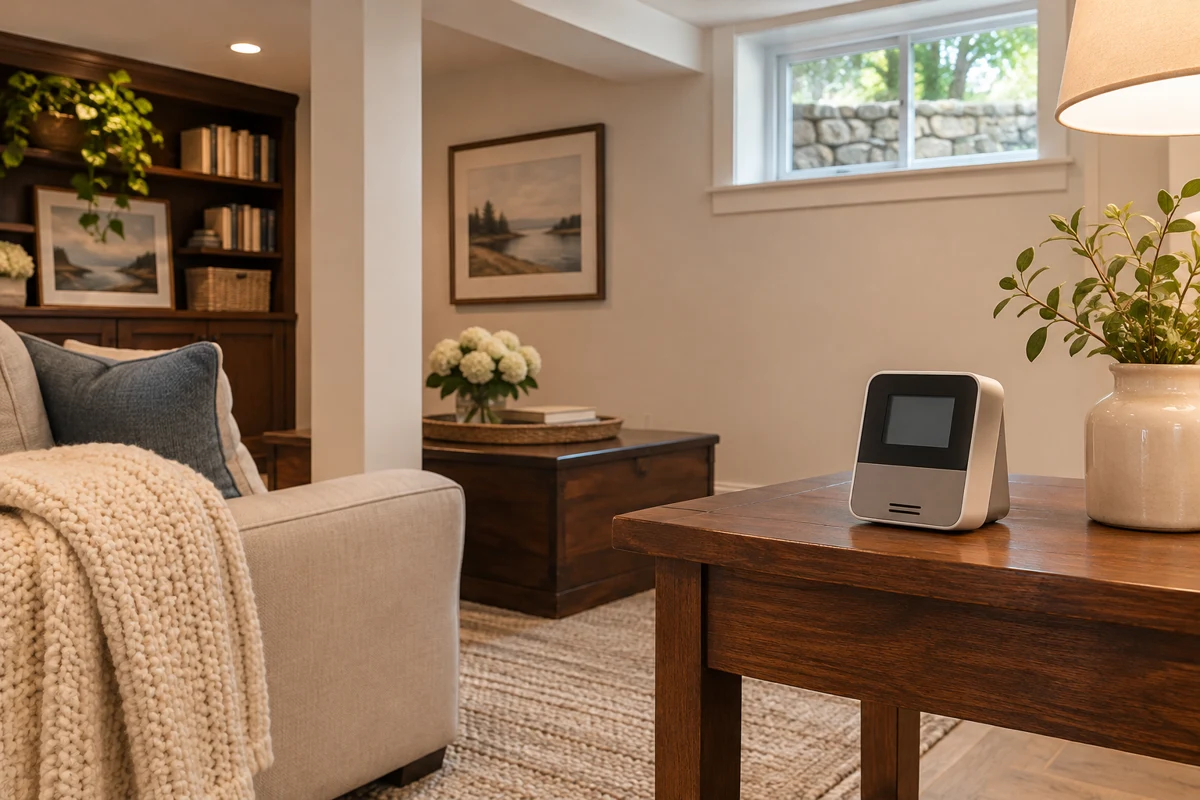
A finished basement may look clean and comfortable, but that tells you nothing about its radon level. The gas is invisible and has no smell or taste.
Guidance: EPA: How radon enters a home
Why should homeowners take it seriously?
Long-term exposure increases the risk of lung cancer. Radon is the second leading cause of lung cancer in the United States after cigarette smoking, and it also affects people who have never smoked. The EPA estimates around 21,000 lung cancer deaths nationally each year are related to radon.
The risk increases with higher concentrations and longer exposure. Smoking and radon together increase the risk substantially. There is no known risk-free radon level.
What this looks like at home
Even a family with no smokers can be affected. A radon test is a simple way to make an invisible risk measurable.
Guidance: CDC: Radon and your health · EPA: Action level
What do my test results mean?
Radon in indoor air is reported in picocuries per liter (pCi/L). The EPA recommends reducing radon when a confirmed level reaches 4.0 pCi/L or higher, and considering reduction between 2.0 and 4.0 pCi/L.
Reading your results
Below 2.0 pCi/L
Lower level; continue periodic testing.
2.0 to below 4.0 pCi/L
Consider measures to reduce exposure.
4.0 pCi/L or higher
Take action; follow the applicable testing protocol and arrange mitigation.
What this looks like at home
If a valid real estate continuous-monitor test averages 6.5 pCi/L, EPA guidance supports reducing the radon level. For an initial screening test in an existing home, discuss appropriate follow-up testing with a qualified professional. Very high initial readings warrant prompt follow-up.
Guidance: EPA: Action level · CDC: Testing your home
What should I do if my radon level is high?
Contact a qualified radon measurement or mitigation professional. If an initial short-term result is elevated, follow the appropriate follow-up testing protocol. Real estate testing may use different procedures because of transaction deadlines.
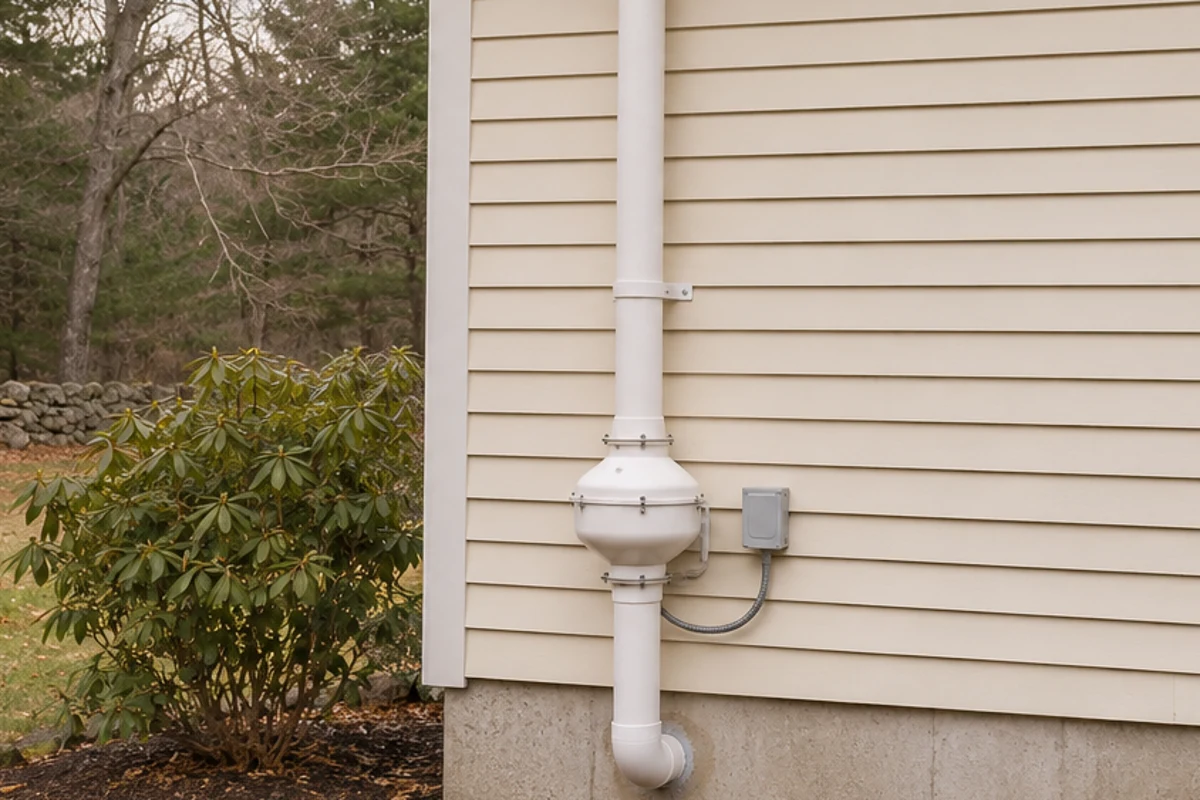
A professional mitigation system often uses a fan and vent pipe to capture radon beneath the foundation and exhaust it outdoors, reducing the amount entering the home. Sealing openings can help, but sealing alone is not a reliable substitute for a properly designed system.
Retest after mitigation to verify that the system is working. Do not assume a running fan proves that radon levels are low.
What this looks like at home
If a home already has a radon mitigation system, ask for its most recent test results. A new test can verify the current radon level.
Guidance: CDC: Reducing radon · Massachusetts DPH: Fixing radon
How often should I test?
Test if your home has never been tested, when buying or selling, and before and after major renovations. Test again if you begin using a basement or other lower level as living space.
As a practical routine, retest about every two years, especially if a mitigation system is installed. Massachusetts DPH advises checking a mitigated home every year or two. Levels can vary with seasons, weather and changes to the home.
A short-term test can help when a quick answer is needed; a long-term test lasting more than 90 days better reflects average year-round exposure. Winters Home Inspection offers electronic radon testing, typically over 48–72 hours.
What this looks like at home
If you tested three years ago and recently finished your basement as a home office or bedroom, now is a good time to retest.
Guidance: EPA: When to retest · CDC: Testing · Massachusetts DPH: Testing your home
Testing With Winters Home Inspection
You do not need to figure out the testing process on your own. We keep it simple, whether you are buying a home or checking the one you already own.
Schedule
Request radon testing alongside your home inspection or as a standalone service. We coordinate access and explain the required conditions.
Set up
We place the electronic monitor at an appropriate location and leave it in place, typically for 48–72 hours. Normal entry and exit are allowed; follow the test instructions.
Collect and explain
We coordinate pickup, review the readings and provide the results and guidance in clear language. If the level is elevated, we can explain the next steps and recommend a qualified mitigation professional.
No guesswork. Just a straightforward process, helpful answers and greater confidence in your home.